Book Review: The Anarchist’s Design Book
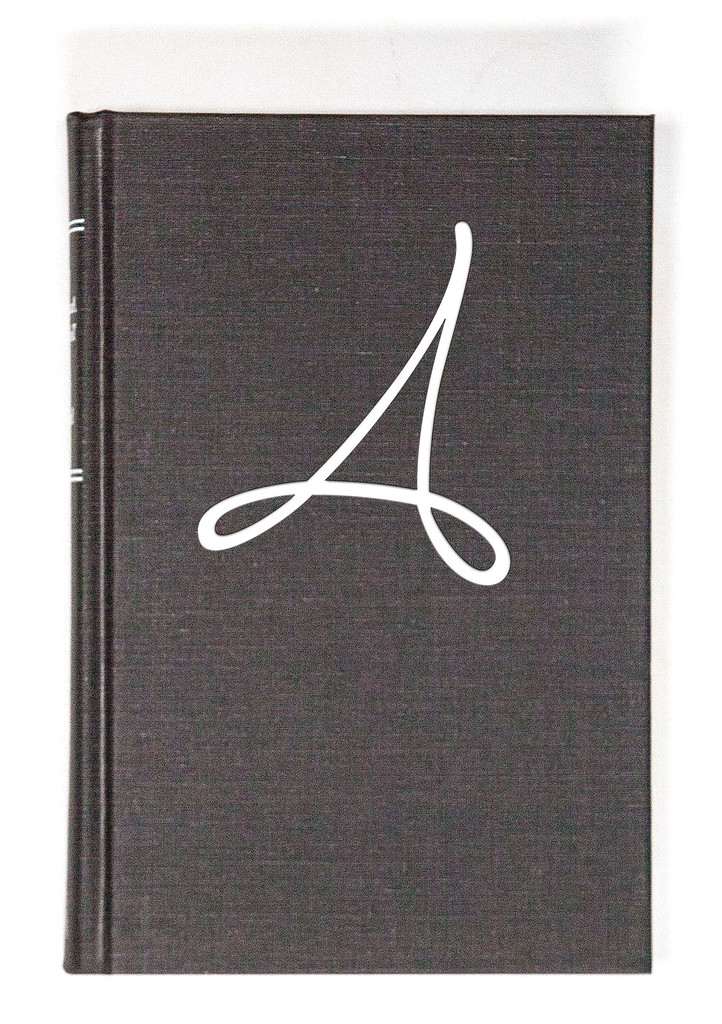
The Anarchist’s Design Book by Chris Schwarz.
Short Summary: Interesting book with good ideas that makes me want to build furniture.
I recently finished the latest subversive rant “The Anarchist’s Design Book” from the chief anarchist of woodworking, Chris Schwarz.  I’ve been a fan of his work before, and have had the opportunity to take a week long class from him making the infamous tool chest.  So, I’m obviously somewhat in the Schwarz camp already, so this review should be taken in that light.  Also, I should note this review is of the Electronic version.  I wish more publishers gave me the electronic version with the printed version, then I could have it both ways with a easily portable library at my finger tips, and a book case full of wonderfully tactile tomes.
Anyway, on to the review.  The book is written even more so in his laid back and somewhat sardonic style than previous books.  This is not a dry textbook style book, but rather one full of personality and life.  This may not appeal to people for sure, especially those who are already not fans of the Schwarz.  I personally like this style, because it’s more interesting to read and you can get a real sense of the person.
The book is divided into two main sections, each tackling what the author considers somewhat lost arts (see what I did there?) of “staked furniture” and “boarded construction” techniques. Â The text is a mix of projects, instructions, and opinion blended together. Â You have to read the whole thing to get the sense of it. You can’t really just skip to the projects, and jump in. Â The projects them selves are interesting, and I found myself considering taking on at least half of them. Which is pretty good for me as I tend to only be interested in one or two projects. Â The staked chair section is of particular interest, as I’ve been turned off by many of the designs, and styles out there. Â Building a Windsor chair seems terribly daunting, and overly complicated for someone who doesn’t get a lot a shop time. Â The four legged chair is likely on my list to build.
He does go on at length about the 3 legged chair, but it’s not something that appeals to me. Â This is one of the places where it felt a little forced to me, where he had an idea that he was intellectually in love with and tried to force the idea a bit. Â This is the anarchist in him showing a bit, challenging the status quo for which I applaud him. Â Ultimately it’s interesting as a thought exercise, but visually I just don’t love the look.
In the next section he tackles boarded construction, which is something I’m a bit more familiar with personally, but still contained quite a bit of great information in it. Â I’m going to give the bookshelf construction a go, following his steps verbatim for one, and then try applying them to larger projects. Â We have a lot of books, and a lot of sagging IKEA shelves. Â I would love to replace the tall ones with hand made ones, so that’s going on the project list after I try the shorter version.
For me this book will occupy a place on my woodworking bookshelf, or rather will likely have a spot reserved for it, but will probably be down on my work bench for a while, while I experiment with staked tenons, and octagonal legs.
Badger
The future and the past.
I find myself conflicted at times. Â I love history, and old things. Â I met my wife at a history re-enactor event, we collect old things, we study history and create things using old methods or designs (she loves all things fabric). Â However, I also look to the future, I love robots and technology, I have a 3D printer (two actually) and love science and science fiction.
What does this have to do with woodworking?
I have found an intersection between those halves of me. Â Or rather I have CREATED one. Â I’ve been exploring 3D printing applications for historical woodworking.
Three things so far that I’ve made, and share for everyone to try out (if you have a 3D printer).

3D Printed Dovetail marking Templates
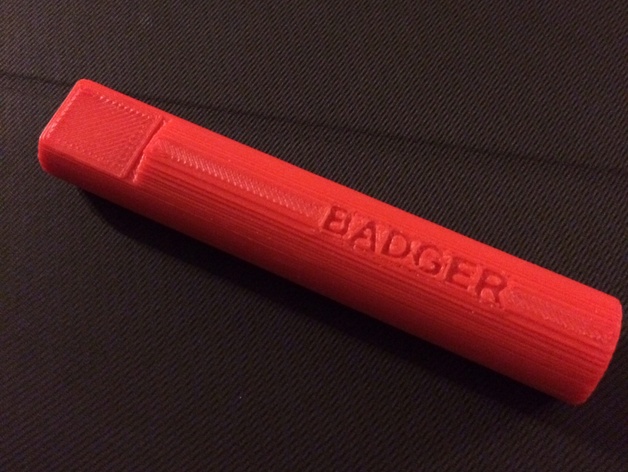
3D Printed Bench Dog

3D printed Marking Gauge
I’m kicking around a few other ideas as well, I think it would be possible to create things like planes and the like, but I am conflicted because they would be plastic which is just not as nice as wood. Â However, you could create custom profiles if you got the base design figured out. Â I’ve seen other creators doing other things, templates and the like. Â Pocket hole jigs (if you’re into that sort of thing) have been made. Â Dust collector adaptors, center finders, and even a sliding bevel.
I think that this could be a bridge between the old and the new, and help aspiring woodworkers dip their toes in for lower cost. Â Sure it’s plastic, and will probably not last as long but it’s a way to get in and get started, easing a ramp into a wonderful and fulfilling hobby.
Badger
A study in interlacing.
A combination of work and family life has made visits to the shop a rare thing for a while. Â A combination of exhaustion and boredom made posts to the blog even rarer. Â Such is life.
Got a little carving done the last couple of weekends, working on some new stuff to mix it up a bit.  I call the post a “Study in Interlacing” because each of the three panels I am working on is some kind of over-under type pattern.
On a lark I tried your standard “celtic knotwork” pattern, the kind you bang out on graph paper for fun.  It’s a lot of repetition of cuts, and it’s easy to miss one line if you are not methodical about it.  Layout took the most time, and once that was done, I was able to carve it pretty quickly.  The majority of the work is V-tool work, with a small shallow gouge to take care of under cutting. I used one of my background texture punches to finish it out on the “dots”.

Knotwork and Basket Weave carving
After that I looked a different type of “weave” that I have seen  before in a book on Japanese carving.  It looks like a basket weave, and nearly wrecked by brain trying to lay it out.  The secret is that its NOT a square grid layout.  It’s a two x three layout, almost like a herringbone pattern. Once I got that, I was able to lay in the lines, and get to work.  This one is a lot of flat wide chisel work, and a larger shallow chisel to handle the over under work.  I think it looks great in a raking light.
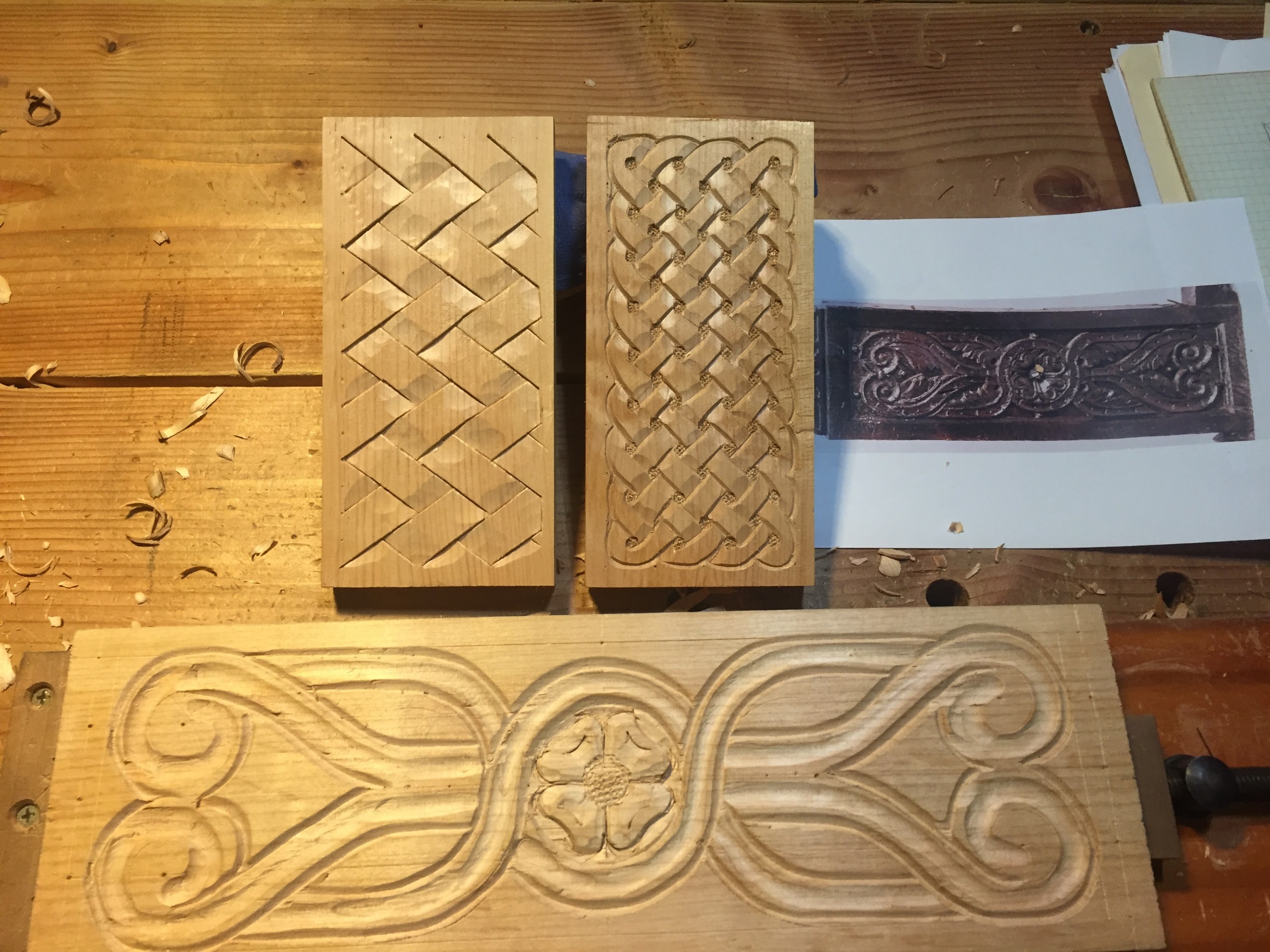
Sides and front of the “Study in Interlace” Box.
Continuing the theme, I drew inspiration from a “pew end” carving that I spotted at Marhamchurch Antiques, a massively great site for medieval carving enthusiasts.  One of the set of four Pew Ends recently sold there had this great over under theme that I wanted to try.  Layout was fairly straight forward if you’ve done a bunch of S-Scroll carving, so I started with the center circle using a pair of dividers and just eyeballing the width of the ring. I used the same line width all throughout to maintain a consistent look.  The two ends are laid out like half of an S-Scroll pattern with the two circles, and then I just connected all the lines and figured out over-under pattern.
Started with a V-Tool I outlined the whole thing, and started in with medium deep gouge to dish out the center of all the lines. Â This is where is started to go astray unfortunately. Â This is Alder, which fairly soft, and the tight corners chipped out like crazy. Â I did the best I could to clean it up with slightly shallower gouge, but I wasn’t able to totally clean it up. Â I’m not super pleased, but I’m going to finish it up anyway to get the practice.
The top will likely be Pine or Poplar depending on what I have in the shop. Â If I have a big wide poplar piece, I might carve that as well, we shall see.
Badger
Travel box
I’m going to be travelling east in a week to take a carving class from Peter Follansbee!  It was pretty much a spur of the moment thing, and my family is coming with to visit some of the sites and hit New York for a day on the way back.  I needed to take some of my tools with me so I thought I’d whip together a box.  And of course I can’t NOT carve it… especially if I’m going to a carving class.  Gotta show off ya know.

Carved Travel Box
The box is made from Poplar because that’s what I had in the shop at the time. Â I wish I’d gotten some Alder or Walnut but IÂ didn’t have the money handy or the time. Â Luckily this was some harder Poplar that usual, and was consistent for the most part. Â It was also a nice wide board, so I was able to carve the top which I don’t typically do.
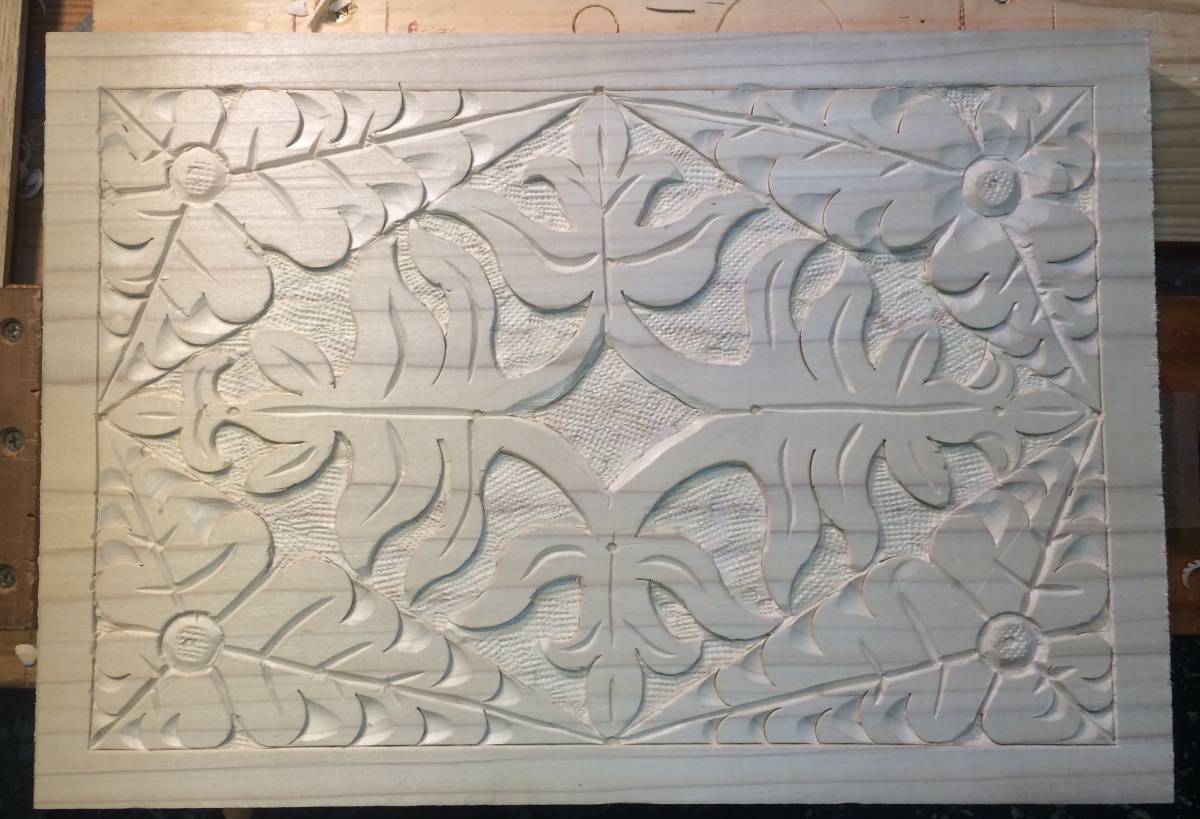
Top design for the Travel Box.
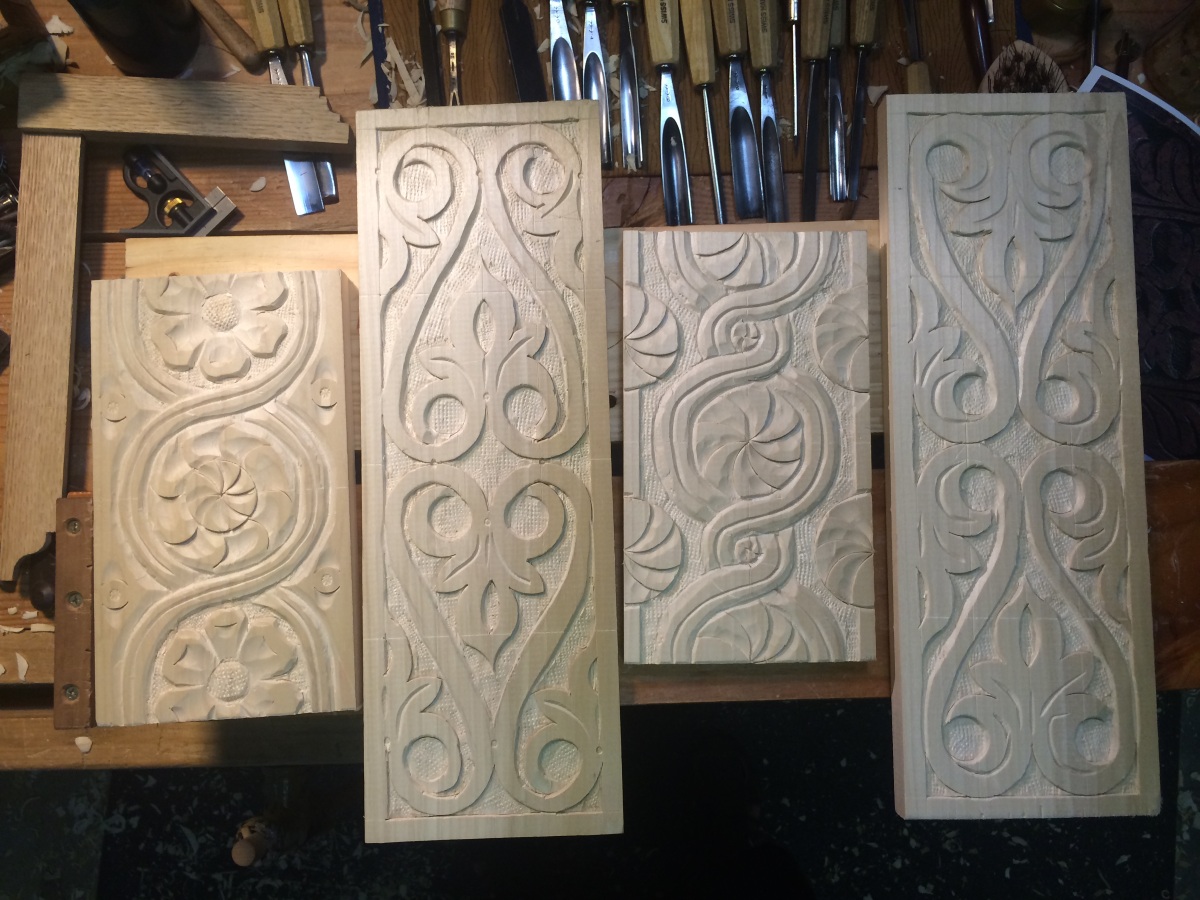
Carved box sides for the Travel Box.
For the front and back panels, I used S-Scrolls which I consider to be the swiss army knife of designs, and the sides were variations on the interlaced circles motif. Â Typically a box of the period would only have the front, and maybe the sides carved but I like to practice layout and carving so I did all surfaces.
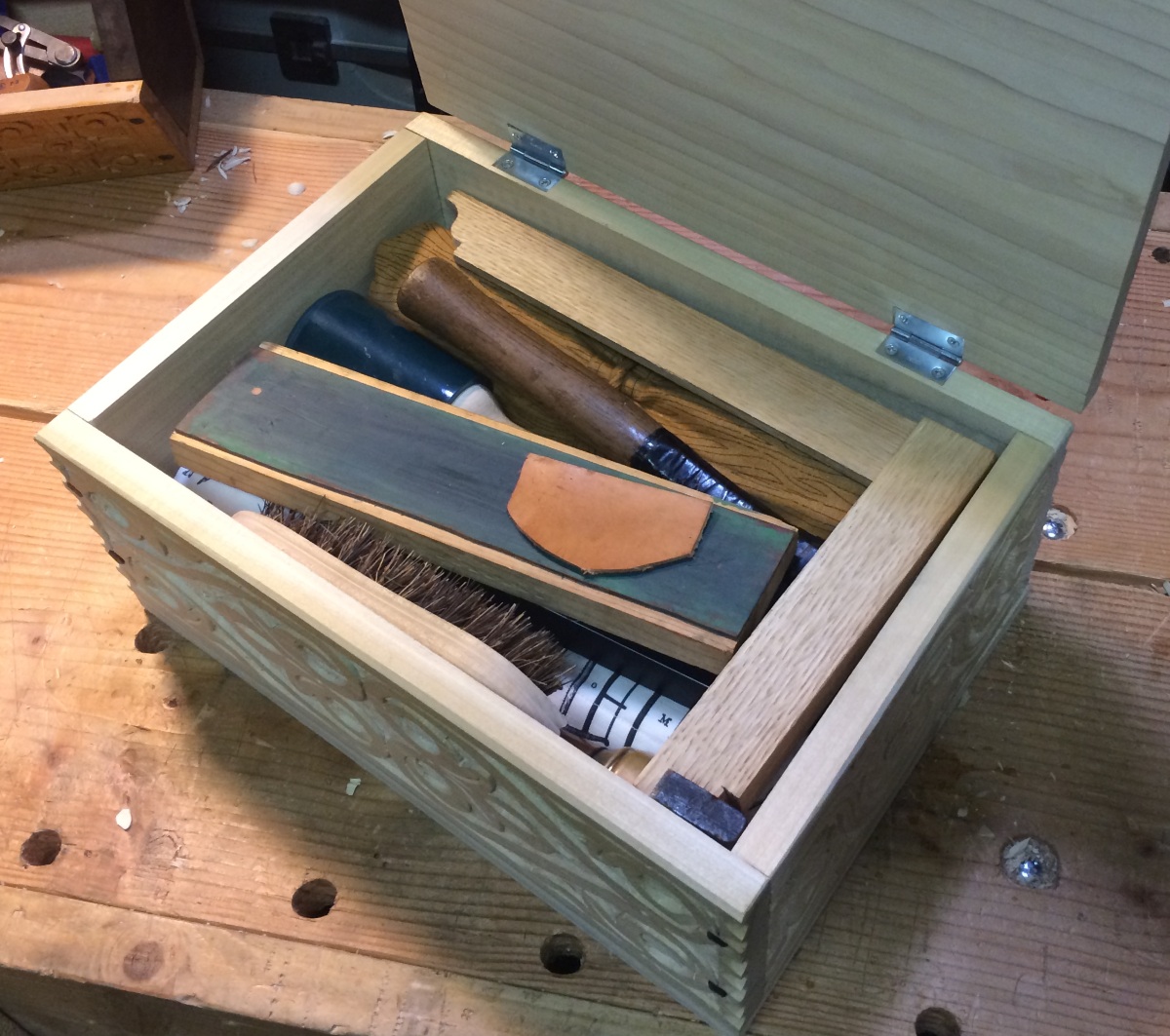
The Travel Box – Packed.

The tools!
I designed the size of the box to fit in my big suitcase, and to fit my tool rolls full of chisels.
I was able to cram the following in the box:
- 18 carving chisels
- 1/4″, 1/2″, 3/4″, 1″, 1 1/2″ bench chisels
- 5/16″ Mortise Chisel
- 2 carving mallets
- 3 compass
- Awl
- Marking knife
- 2 marking gauges
- metal hammer
- decorative punches (in the mint tin)
- 2Â squares
- Folding rules
- Pens/Pencils
- Stropping block
- Block Plane
- Carving Brush
I’m going to have borrow some tools when I get there, but I should be ok. Â The whole kit weighs 27 lbs.
I’m pleased with it, especially the top design because that’s a new layout for me.  The central design is based on a Thomas Dennis chest panel, and the outside edges I lifted from another panel of the period.  My only complaint is the wood, with that awful coloring. I can’t use my normal Shellac top coat without adjusting the color or bleaching the wood.  Which will have to wait till I get back.
Badger
As I work on finishing the Anarchist Tool Chest project, I needed to finish the carving for the sides of the tills. Â Now, I wouldn’t ordinarily carve Poplar if I can avoid it, but this is the wood that was supplied as part of the class. Â In parts it was fine, in other is crushed like paper, ugh.
Anyway, I tried a variation of the Fleur pattern I found on an old chest that is at the Met.  I like the little Fleur pattern to fill in the triangle left by the arc.  Pretty cool looking.
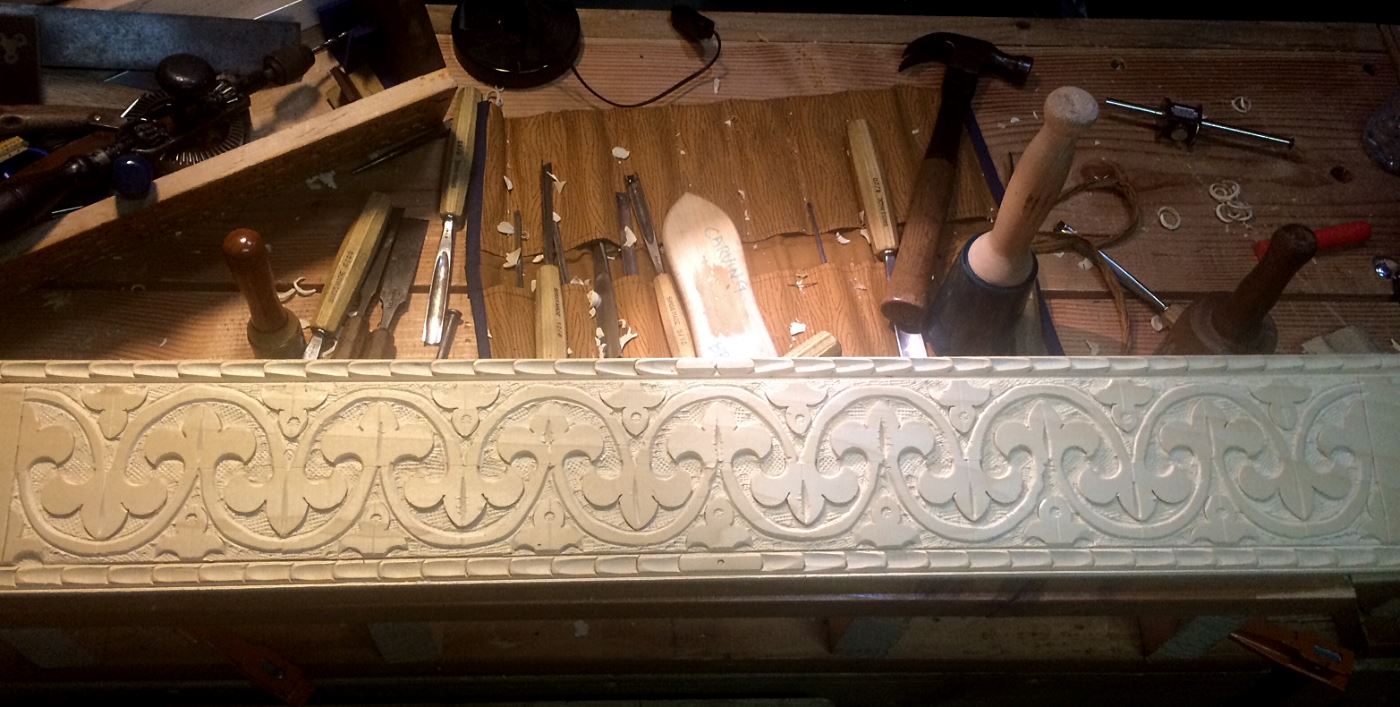
Side of the last till, carved in a new variation on the Fleur pattern.
That should be all the sliding till sides, so now it’s time to start putting them together and finding a while to fit them into the chest.
Getting closer!
Back to work on the Tool Chest
After quite a long hiatus on this project because of Life, Work, and various and sundry things I am back to working on my Anarchist Tool Chest. Â It sucks that I had to put this down for so long, but it just had to be on the back burner for a while.
Last weekend I picked the project back up again and actually made some progress.  With the lid being done, the next step was to mount the lid on the shell.  Which means hinges.  I personally hate hinges.  I suck at them.  I just do.  So it was part of why I was putting this off for so long.  I took a deep breath and tightened my belt and other euphemisms as well and just got to it.
Except I didn’t.
Turns out the wood had moved quite a bit since the last time.  The lip where the lid rested on had swelled horizontally somehow, and was no longer straight.  I suspect the wood we used wasn’t totally dried (if you were in the class you can hear the dripping sarcasm from here).  I planed off a bit on each front and back lip until my lid and back edge lined up again.
Now it was time for hinges.

Hinge!
Which actually went just fine despite all my whining and wailing. Â I followed the directions in the ATC book fairly faithfully, and took my time. Â The lid ended up every so slightly askew, which I cleaned up with a few passes of the plane.
So, now I have a functioning lid that fits well and opens smoothly.
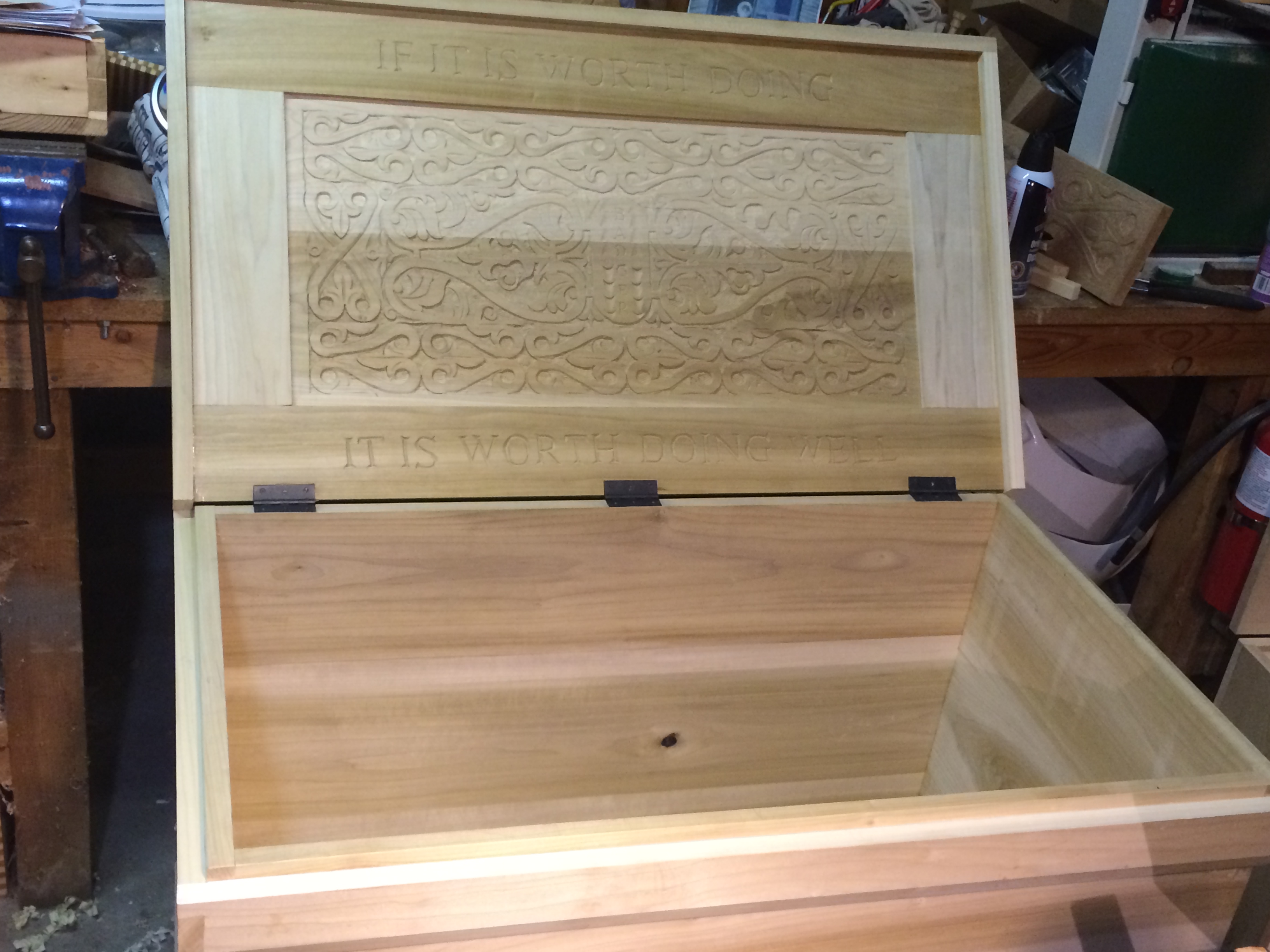
Lid Open!
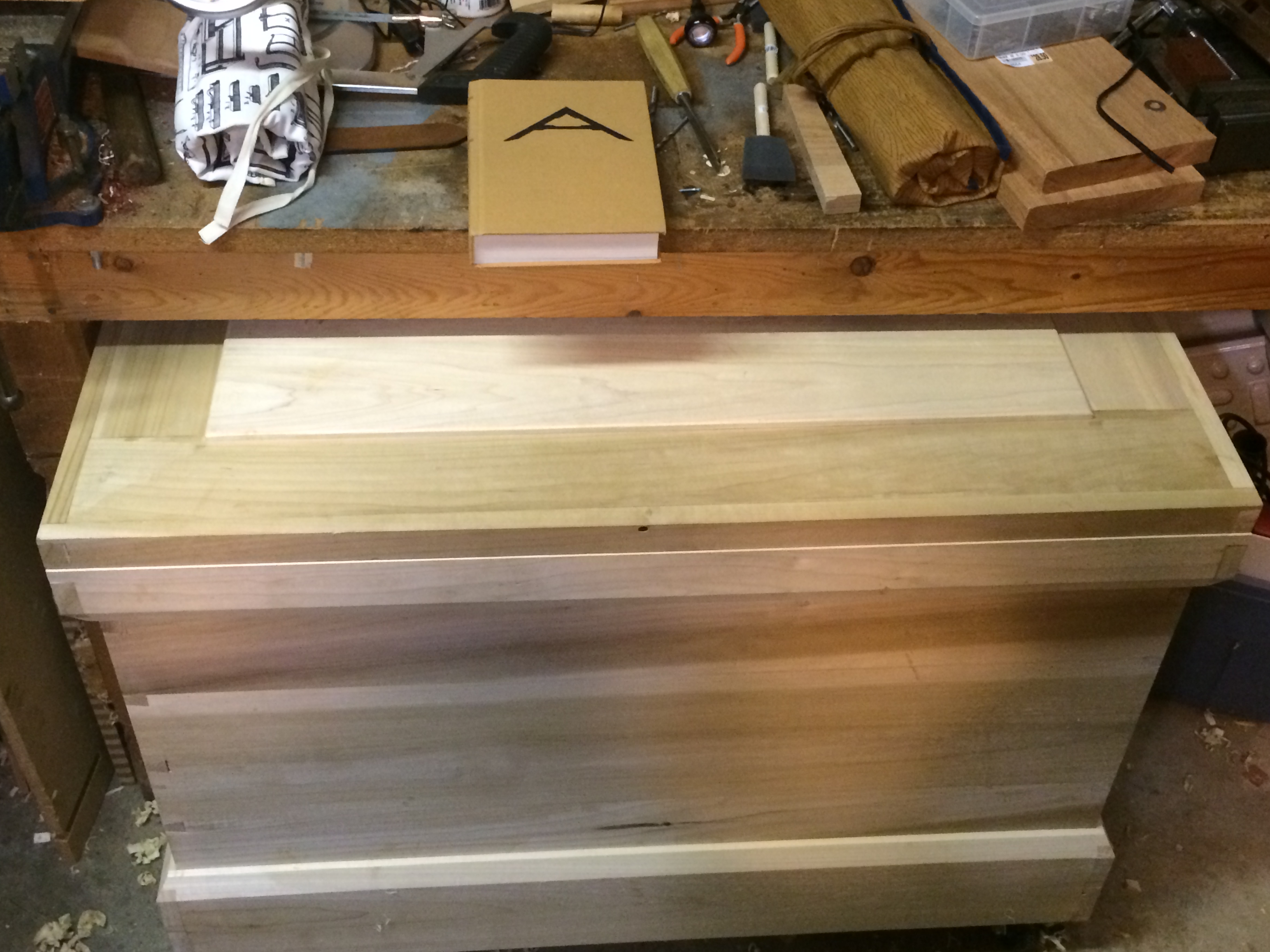
Lid closed! (and tucked under my secondary bench.
This completes the outside woodwork. Â I’ll paint it black with milk paint, and then start in on the inside. Â I might actually get to start putting TOOLS in it soon. Â That is pretty exciting.
Badger
Carving Class load out…
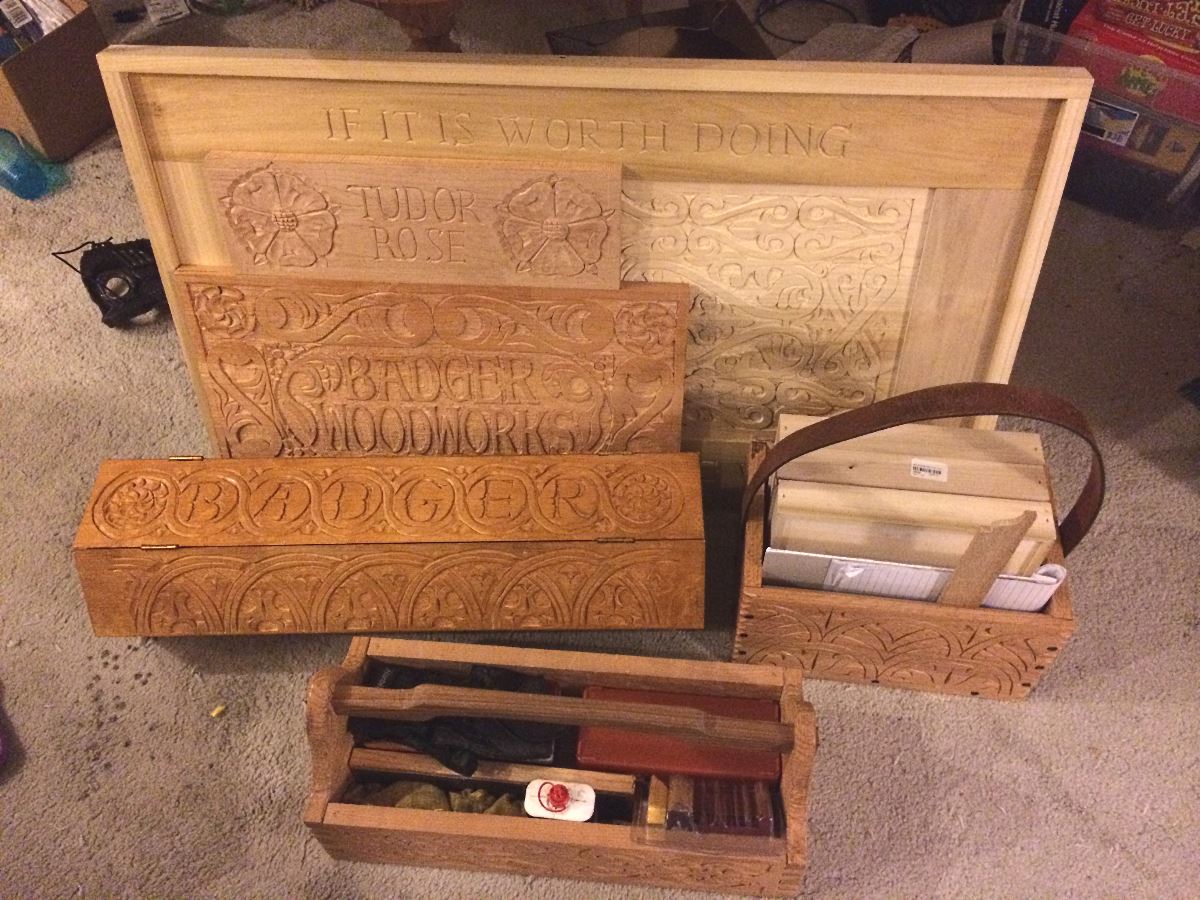
Loading up for the class
I was loading up for the Letter Carving class I’m teaching tomorrow at Rockler, and I was struck by the pile. Â I guess I like to carve things… 🙂
In the back is the inside of my Anarchist Tool Chest Lid, emblazoned with “If it is worth doing, it is worth doing well.” Â A practice board for my Tudor Rose class and my Shop Sign all finished up.
Then there is my six sided box, one of  my first carved boxes with the “arc” style design and my tool tote.
I’ve been thinking about making a “Dutch” tool chest, but I’ll need to find some good wide Poplar boards because carving pine is crap. Â And I certainly can’t NOT carve it. Â I have a reputation to protect. 😛
I am considering another carving class in the fall as well.
Carving a Rose Sample Board
In preparation for the Class this Saturday, I refreshed my memory on carving the “Tudor” style rose. Â I completed my carving sample board last night, and I think it turned out pretty well. Â I was originally going to do a row of roses, but in the end I did two flanking roses and free-handed some lettering in the center.

Tudor Rose sample board
I also snapped some step by step pictures along the way for my hand out.  Once I get something share-able I’ll probably post it to the blog as well as these flowers are a lot easier than they look.  Plus they are great practice for nearly all the basic flat relief carving motions and skills.
If you’re around North Seattle on Saturday I’ll be in the back of Rockler store if you want to drop on by.  Also, I think there are spaces still open in the class if you’re interested.
badger
A few updates: Class, Tool Rolls, and Good Press.
Class Notes:
Finished the second day of my two part class on Relief Carving at Rockler this weekend. Â Of the two people I had signed up, I had one no-show (she had to work apparently) so I spent some quality time with the other guy. Â This session we covered carving some S-Scroll pattern on some Alder. Â The wood was much better for the class, and I think I’m going to use it more frequently in teaching and in personal. Â The rack of wood up front had some other woods, but this was best straight grain stuff I could find.
I also have some news! Â I will be teaching two more carving classes at Rockler this year, in addition to the high likelihood of doing some demos as well.

Tudor Rose Panel
Based on the Medieval Rose panels I did for my mothers box, I’m going to do a single day session on how to carve this rose motif. Â I used the words “Tudor Rose” since I figure that they would be more commonly known by that name.
Class Name: Carve a Tudor Rose by Hand
Date: May 15th, 2014 Â 9:30 – 3:30
Price: $85
Learn to carve this stylized rose from history that is often called a “Tudor Rose”. The class will start with the basics and take your through each step to carve your own decorative rose. This project will show you all the elements of relief  carving and makes a great display piece on its own.
I’ll also be doing a class on Basic Letter Carving by Hand in the fall as well, it’s currently scheduled for August. Â Neither one is listed yet, but the Rose class will be up there soon as I’ve sent in the final details
Follow up on the Demo
The demo that I did back a month ago for the Northwest Woodworkers Association published their meeting notes for that meeting, with a really nice write up about the demo I gave. Â I’m not a huge fan of talking about my self, and self promotion but I think this article covers things pretty well.
Tool Rolls
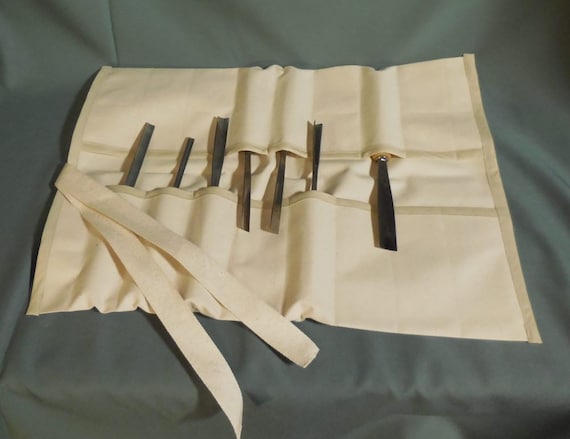
Tool Roll for Sale
My wife finally put together her page on Etsy for selling those Tool Rolls I post about from time to time. Â You can find them for sale here on her page.
Teaching Carving and Demo
This Saturday I taught my first woodworking class.
I’m just going to take a moment to dwell on that last sentence. Â It’s a big one for me. Â A sort of “Level Up” moment in my life. Â I’ve always been a guy who makes stuff, or fixes things, or takes things apart (sorry mom) and sometimes puts them back together. Â But being a “teacher” of woodworking is brain-stretcher for me.
This journey down the woodworking rabbit hole has been pretty interesting, and I look at people like Chris Schwarz and Peter Follansbee as teachers, guides, and generally cool people. Â (and sorry Chris, but I did model my teaching style on yours a little bit, I know that probably gives you a little heartburn but it fits well with my style.)
Saturday I did the first part of the class as it is a two parter, and we covered the basics while carving a single panel.
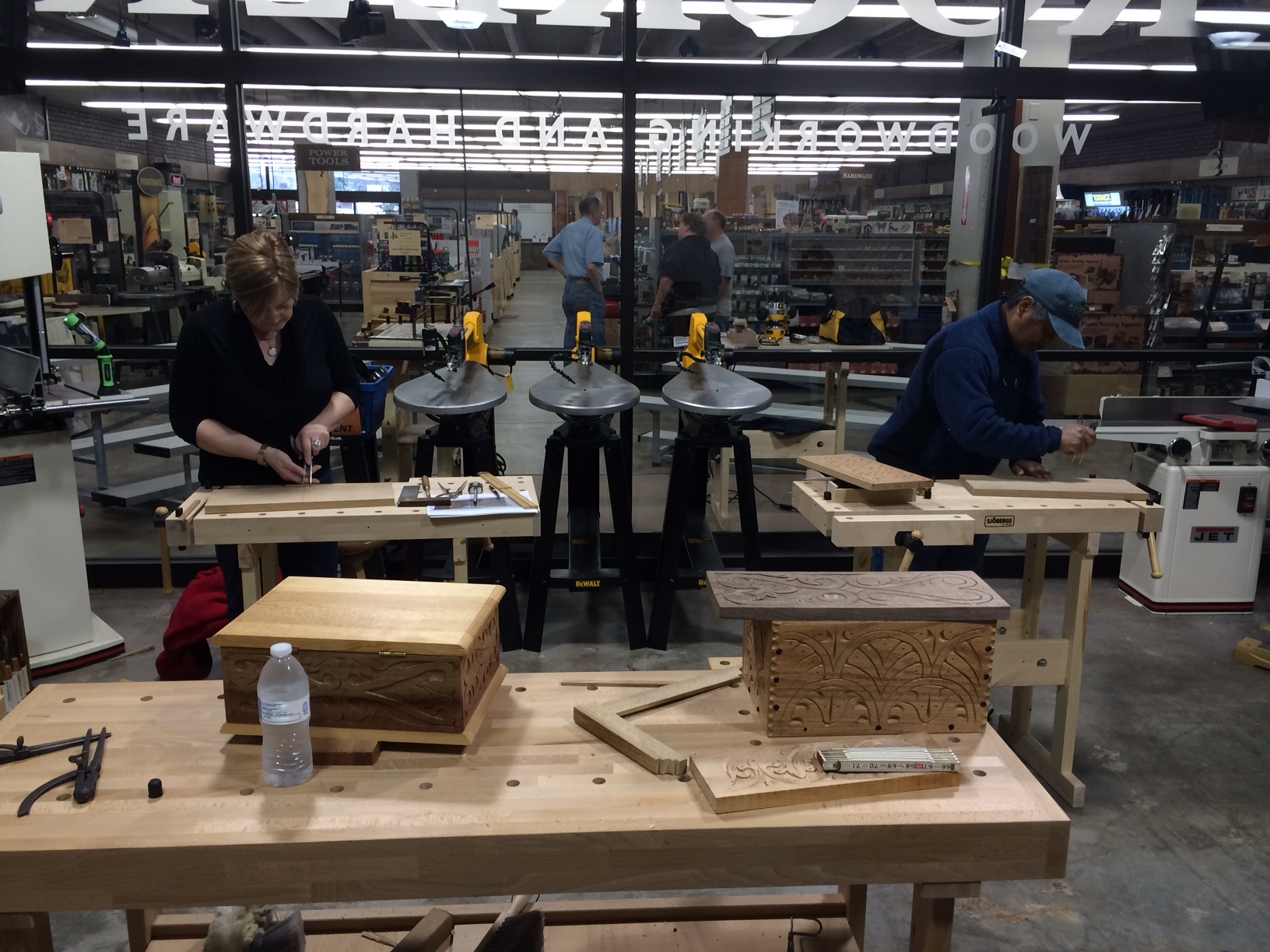
Students at the Flat Relief Carving Class. Rockler, Northgate Seattle WA 4/12/14
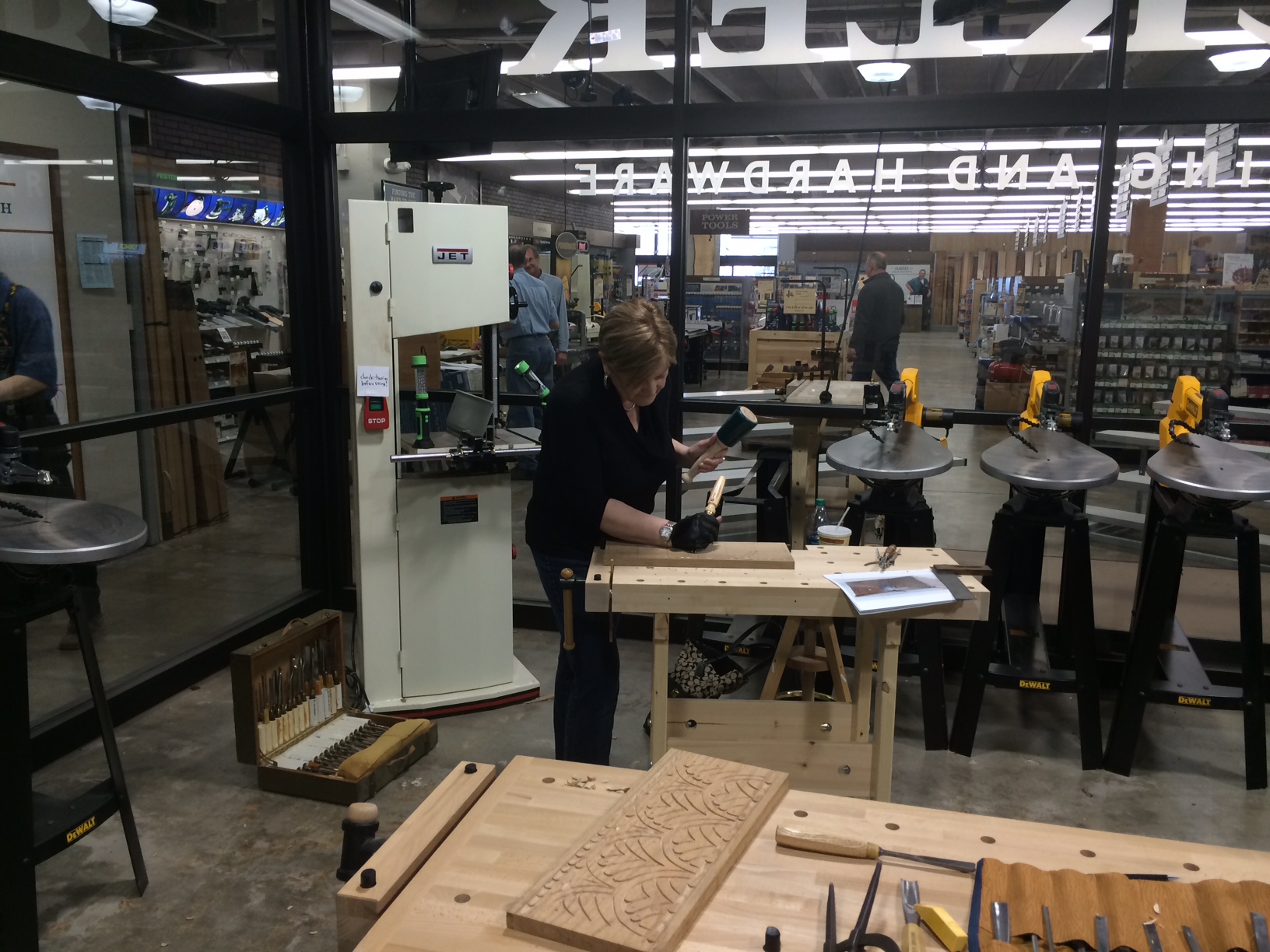
Students at the Flat Relief Carving Class. Rockler, Northgate Seattle WA 4/12/14
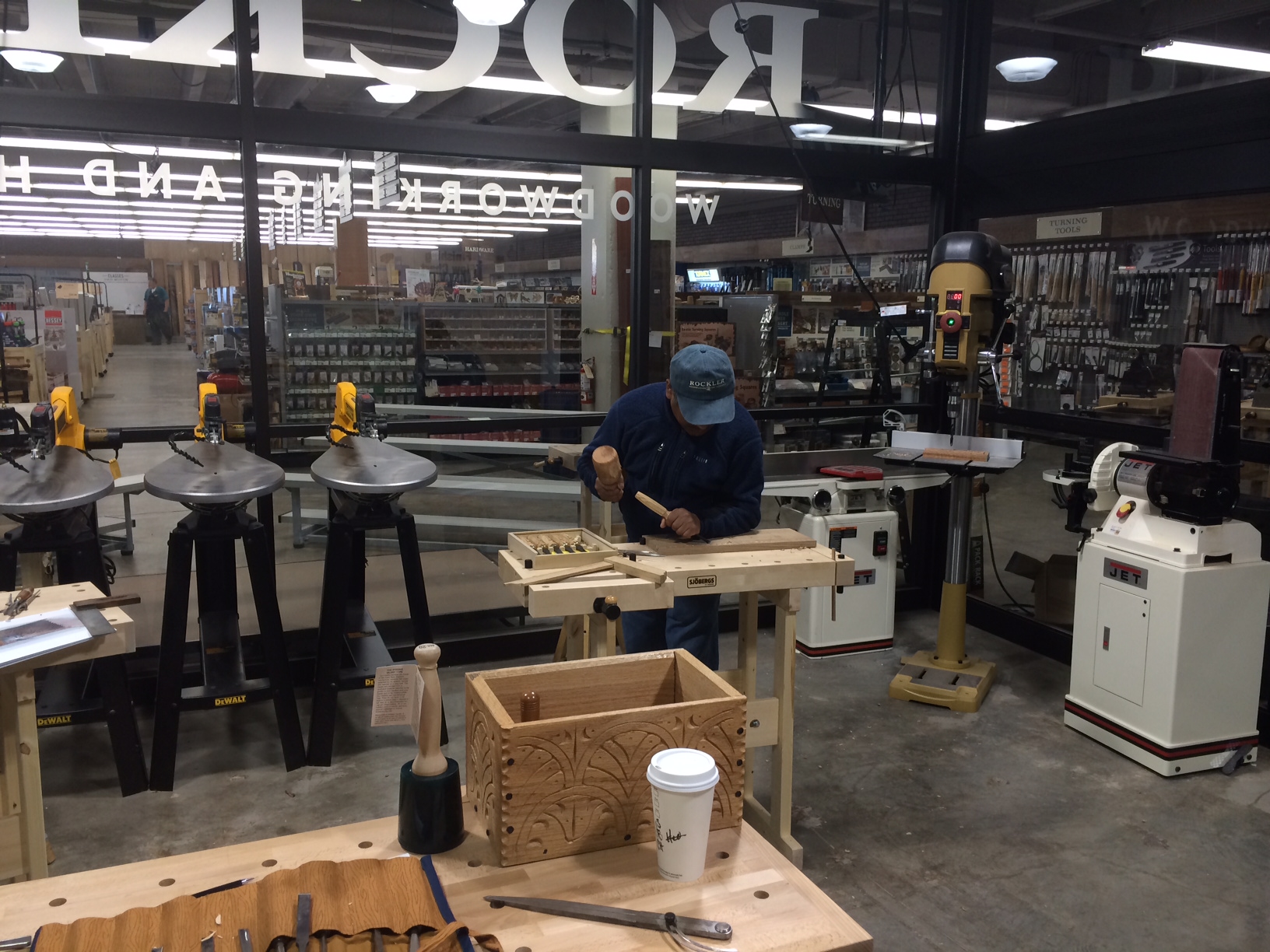
Students at the Flat Relief Carving Class. Rockler, Northgate Seattle WA 4/12/14
First we covered the gouge cut decoration along the top and bottom edge of a piece of oak. Â This showed how to hold the chisel, dividers, carving mallet. Â The repetition allowed them to build some muscle memory and get a feel for the motions and for the materials.
Then we did a simple repeated arc pattern in the center area. Â This showed them layout with dividers, and lots of practice with the V tool. Â As well as some design at the point of the tool for the floral decoration, and some punch work with the accents. Â One student finished, the other got at least the core design down. Â All in all it was successful for me as a teacher in that I got through what I wanted in somewhat the order I wanted to. Â I had gauged the right amount of work and discussion. Â They both felt more comfortable with the tools by the end, and their work was improving each step.
Things that I learned.
- Cover more about sharpening, and bring my sharpening equipment so I can fix a battered chisel.
- Get better wood than the Oak we used. Â It was case hardened, and had some wiggly grain which was a frustration.
- Make sure I have a anti-fatigue mat at my bench to ease my aching knees.
- The class itself was little too advanced for a first time class at this venue. Â I’m thinking of doing a simpler class on letter carving (which I already have one student signed up for if I do it.)
The students were very interesting. Â One lady brought her fathers tools, and a great story about how he used them and passed them to her. Â It was a beautiful set, I mean LOOK at these.

A bit of History
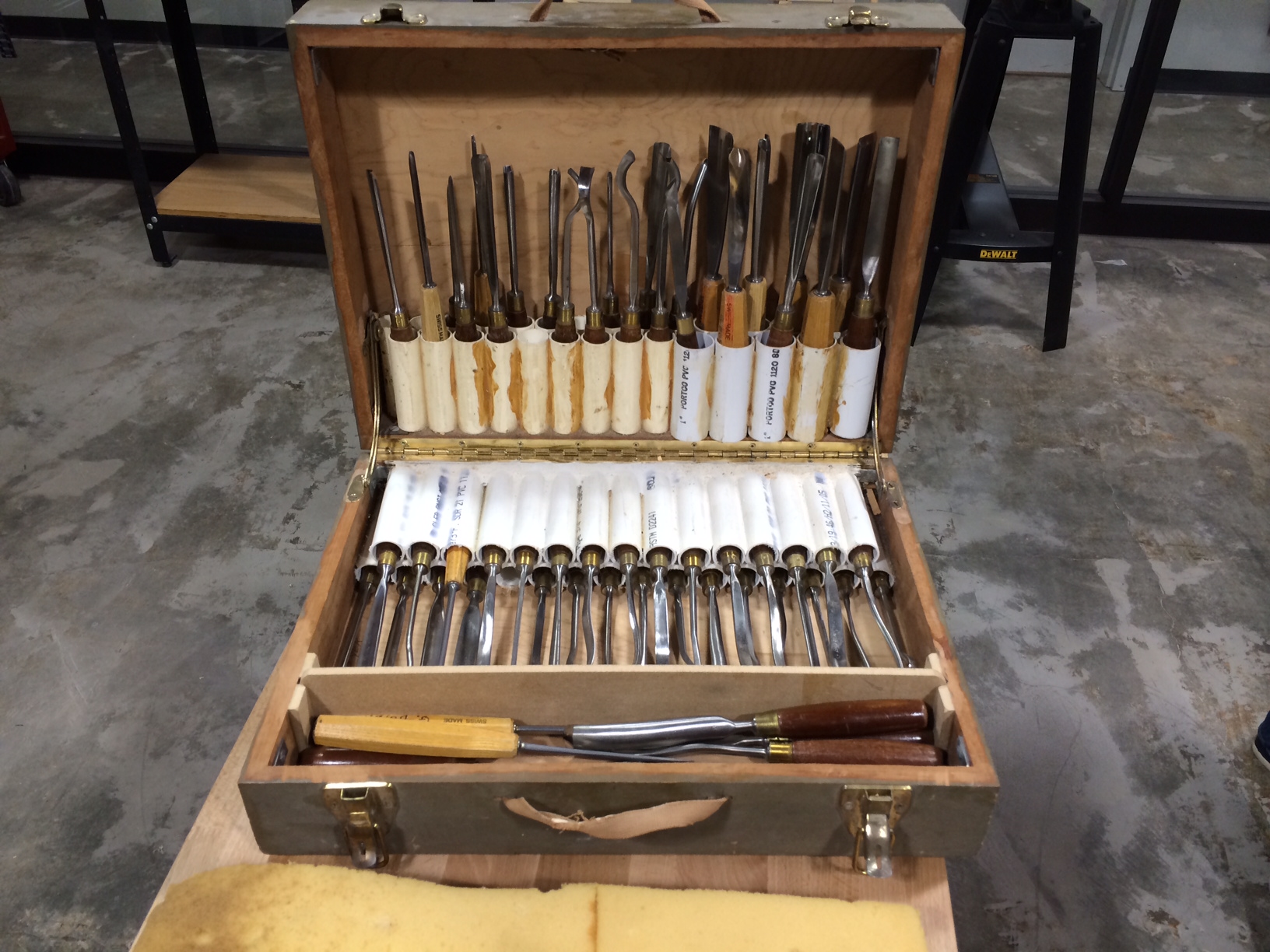
A beautiful set of carving tools with a great bit of history.
It was a great experience, and I’m glad I was able to help her connect with her past a little.
The other student was from Nepal and his home village there had a tradition of woodcarving. Â He wanted to learn some of it and he took my class to see if it was something that he could do. Â Both students seemed to enjoy the class, and I got a good compliment at the end saying I was a great teacher. Â I’m not great at taking praise, but I’m glad it went well for everyone.
In two weeks we’ll pick up where we left off (hopefully with better wood) and tackle some S Scroll carving.
Badger
You must be logged in to post a comment.